
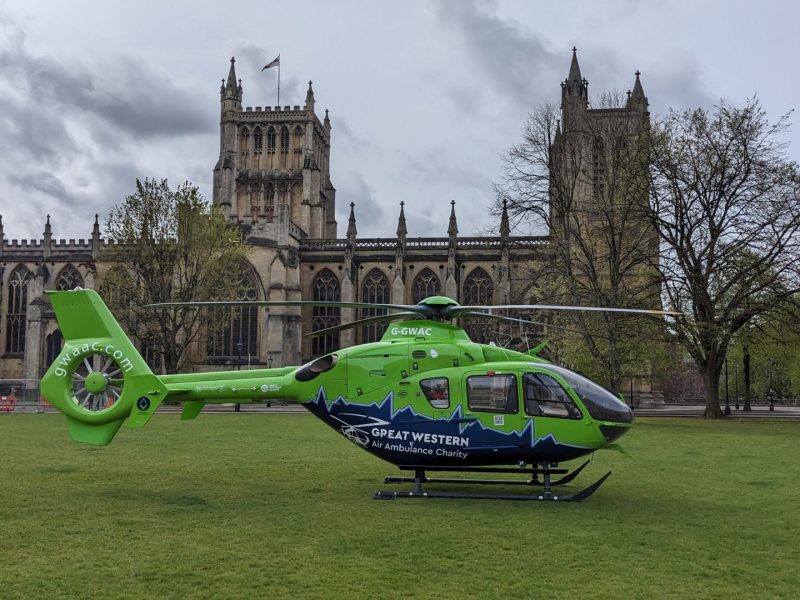
BRISTOL’S air ambulance crew attended a record number of callouts in 2025.
With one helicopter and three critical care cars, Great Western Air Ambulance Crew (GWAAC) responded to 2,344 people in urgent need of carein Bristol, Bath and North East Somerset, Gloucestershire, South Gloucestershire, North Somerset, and parts of Wiltshire.
The team includes Critical Care Paramedics and Consultant Doctors from hospitals, bringing the skills, experience and equipment usually found in a hospital emergency department direct to the patient.
Serious medical-related incidents accounted for 56% of GWAAC’s total call-outs in 2025 while trauma-related injuries accounted for 44% of missions.
GWAAC’s Operations Officer, Tim Ross-Smith said: “We’re getting more requests for assistance from our local land ambulance crews on top of the traditional air ambulance call-outs for incidents like road traffic collisions and cardiac arrests.
“This could be due to the outreach work our crew are doing, educating land paramedics about when we can add value to patients who are in urgent need of care.”
The crew were called to 521 people in cardiac arrest, meaning it is still the biggest single reason that GWAAC’s service might be needed.
One cardiac arrest patient was Pam, 66, who said: “I’m here today because my husband immediately called 999, the paramedics gave me CPR and defibrillation, the GWAAC team kept me stable and got me to a specialist heart hospital. I’d encourage anyone to learn how to do CPR and find where their nearest defibrillator is so they know how to help in an emergency.”
GWAAC’s crew were called to help 668 people in Bristol (28% of all callouts), making it the second busiest region for the charity. Gloucestershire was the busiest region with 677 people in need of urgent medical care. South Gloucestershire came next with 323 people in urgent need, followed by North Somerset (281), Wiltshire (138), Bath and North East Somerset (121), and Somerset (90). GWAAC’s crew were tasked to 46 patients outside of its usual region, such as in Wales.
Only 2% of patients were conveyed to hospital by air. More often, their crew continue treating patients in the back of a road ambulance, where there is more space to work, while transporting them to the hospital best suited to their needs.
Anna Perry, chief executive, said: “Demand for our lifesaving service has never been higher and I feel very proud that GWAAC has been able to help a record number of people for a consecutive year.
“I’m especially proud because our charity has been facing increased operational costs and an increasingly tough fundraising environment. So, thank you to everyone who has donated, volunteered, taken part in sponsored events and bought from and donated items to our shops.
“But we have a tough challenge ahead of us; we desperately want to be able to be there for everyone who needs us so we’re asking for support from our communities again in 2026. If you can, please donate and help us be there for more people in the future.”
For more information about GWAAC visit www.gwaac.com