

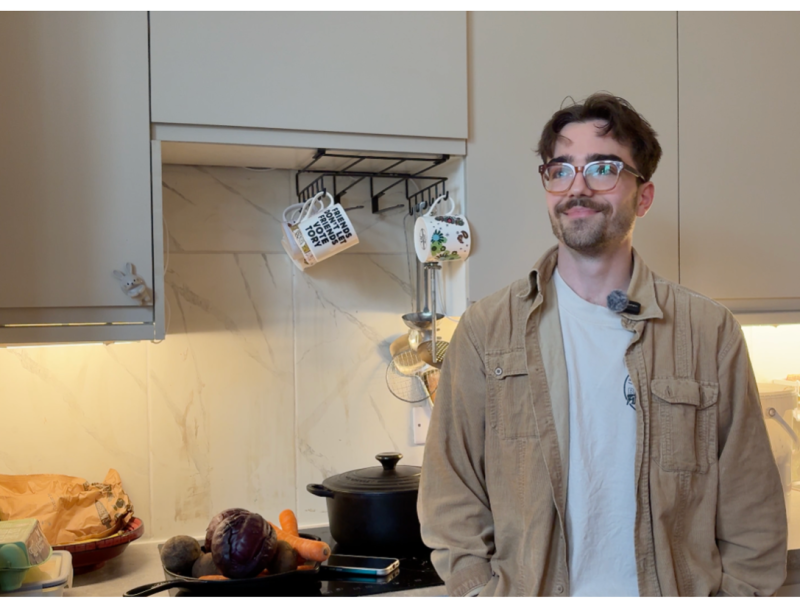
Ailsa Marshall reports on a project that aims to reconnect us with the soil
Take a stroll through Bristol on bin day and you’ll see it everywhere – brown caddies stuffed with vegetable peelings, half-eaten meals, and forgotten leftovers. For many households, once food hits the bin, it’s out of sight and out of mind.
But according to Bristol Waste, discarded food costs the average household about a thousand pounds a year. So what if those scraps were put to good use?
For Alex Montgomery of Generation Soil CIC, the city’s food waste isn’t ‘rubbish’ at all. The organisation is working to transform the way Bristol deals with this by turning everyday scraps into “living compost” that helps regenerate soil and support local food growing.
Its project collects food waste from households and small businesses across the city and processes it locally rather than sending it away to large-scale waste facilities. The material is then fermented and composted before being returned to gardens, allotments, and community growing spaces.
Alex, from Redland, believes part of the problem lies in how disconnected people have become from what happens after food is thrown away.
“There are bins you put your food waste in, you never see it again, and it feels to me very disconnected,” he says. “So instead of quickly trying to transport food waste away from ourselves and our homes as quickly as possible, we can deal with it within a city, turn it into compost – and then we can use it to improve the green spaces around our city.”
The project offers members a simple system: a bucket, bokashi bran used to ferment food scraps, and the promise of regular local collection. Last year Generation Soil composted 2,640 litres of food waste, avoiding an estimated 13.8 tonnes of carbon dioxide-equivalent emissions.
Beyond reducing waste, Alex says the project is also about reconnecting people with the importance of healthy soil. “A lot of people don’t realise the importance of soil,” he explains. “The soil beneath our feet provides over ninety per cent of the food we eat, and when the soil’s not so good, everything just looks a bit less full of life.”
As Bristol continues to search for ways to cut waste and reduce emissions, projects like this suggest that solutions might be closer to home than many people think.
To find out more, visit generationsoil.co.uk