
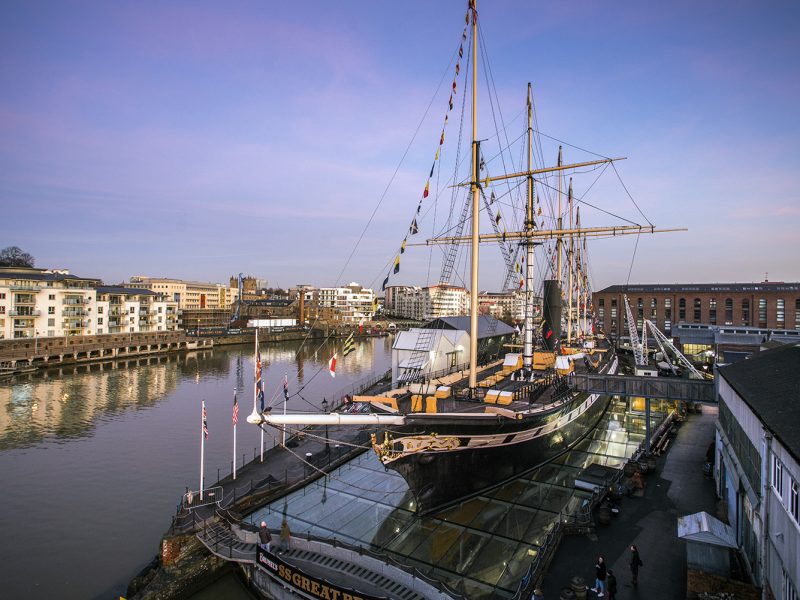
A NEW museum at the site of the ss Great Britain aims to tell a more rounded story of the historic ship.
Bristol Dockyards, which opened on July 18 during the Bristol Harbour Festival weekend, explores the impact of Brunel’s creation on the world, on the lives of those on board, and on the places to which it travelled.
The new curation, which has added 2,000 square feet of exhibition space, uses newly discovered material, interactive exhibits and history discovered by the people of Bristol.
Researchers have uncovered previously untold human stories from the ship’s 41 years of service, from her construction in Bristol in the 1840s to her voyages to New York, Australia, India and San Francisco.
The ss Great Britain was the first modern ship. Made of metal and with engines and a propeller, she was bigger and faster than anything before. Her size and speed shrank the world. Between 1845 and 1886, the ship reached every inhabited continent and carried passengers from 51 nations.
The museum includes interactive exhibits that explain the revolutionary design, life-sized digital recreations of the characters who travelled on board, artefacts carried at sea more than 150 years ago, and historic and modern art. Elements of the ship’s working life, such as the record-breaking yard that carried its sails, and the rudder that steered it around the world are displayed alongside intimate on-board objects, voyage logs, diaries and first-class passenger tickets that reflect the experiences of 19th century travel.
The exhibition honours the individuals who built the ship, such as the Johnsons, five brothers who travelled from the Wye Valley with their father to work as shipwrights.
In the Australian section of the museum, the displays focus on the ship’s impact on migration as the most popular ship connecting Britain and Australia. The ss Great Britain made 32 round trips from Liverpool to Melbourne carrying 15,885 emigrants to Australia, completely changing the Australian continent and the lives of its First Nations inhabitants.
The museum examines the ways in which the ss Great Britain was used as a troop carrier in global and imperial conflicts. She made several journeys carrying troops and horses to take part in the Crimean War, including the regiments of Ottoman General Omer Pasha, and later it travelled to Mumbai carrying British soldiers in an effort to quell the Rebellion in 1857.
The reopening of the museum is the first phase of development by the ss Great Britain Trust ahead of the 60th anniversary in 2030 of the shipʼs return to Bristol from the Falkland Islands in 2030.
Andrew Edwards, CEO of Bristol Dockyards and the ss Great Britain Trust, said: “We are committed to safeguarding this extraordinary heritage while being ambitious about what it can become: a dynamic cultural campus rooted in community participation, learning and maritime heritage.ˮ