
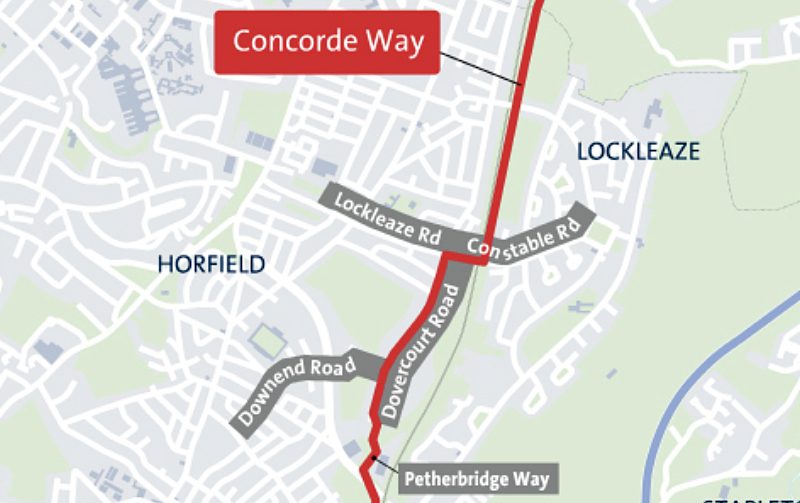
DRIVERS could soon be prevented from travelling the length of Dovercourt Road in Lockleaze in an effort to make the route safer for walkers and cyclists.
The city council is looking at ways to cut the number of cars on the road and is considering putting bollards just above the junction with Dowend Road.
Residents would still be able to drive to their houses, but potentially via a more circuitous route up Muller Road then Filton Avenue. Four raised crossing points are also planned, as well as a zebra crossing, speed cushions and several new trees.
The ‘traffic filter’, as the bollards are called, on the section of the Concorde Way bike route from the city centre to Filton, would let pedestrians and cyclists through, but drivers
Councillors on the transport policy committee have approved spending £450,000 on a full business case, which is needed to get the full funding from the West of England Combined Authority.
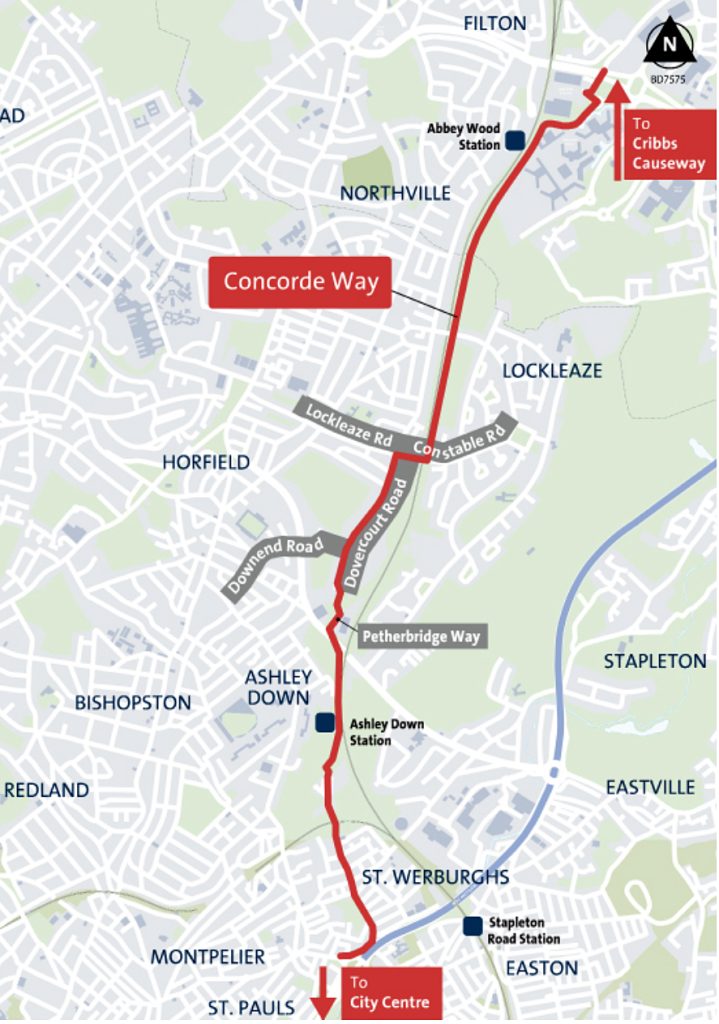
A committee report said: “Concorde Way is a well-known, mostly off-road walking and cycling route in Bristol. It connects Stoke Gifford and Filton in north Bristol to the city centre near Cabot Circus, making it a key corridor for active travel in the area.
“As with any scheme promoting sustainable and active travel, this scheme will make a contribution towards the city’s aspiration to be carbon neutral, will improve air quality, will allow citizens to be more active and healthy, and will make streets safer places to be.”
Over the summer the council consulted the public about the plans. This consultation ended on Monday, September 1, however the results haven’t been analysed or published yet. One critic was a local Chinese takeaway on Dovercourt Road, concerned about the potential loss of trade. Kimling has started a petition against the plans, attracting over 330 signatures so far.
About 1,000 commuters use Concorde Way every day, connecting people to major employers such as the University of the West of England and the Ministry of Defence. Another option explored was building a new off-road section parallel to Dovercourt Road along the railway, but this was ruled out as too expensive.
Reducing traffic on Dovercourt Road would bring the number of cars below the levels at which official guidance, known as LTN1/20, recommends segregated cycling lanes be built.
About 2,000 vehicles travel on Dovercourt Road on most days, according to the council. At peak times, between half and three quarters of vehicles using the road are through-traffic, rather than local traffic.
If the plans go ahead, the council anticipates the project would be completed by the end of 2027. Another consultation would be held before the work goes ahead, as part of the formal process of creating Traffic Regulation Orders needed to change the layout of the roads.
By Alex Seabrook, Local Democracy Reporting Service