
Bristol businesswoman and writer SARAH RICE reflects on the tenth anniversary of Aid Box Community
Hope. It’s like Faith. You can’t see it or touch it. You can’t dress it up or take it to dinner.
But you know when it’s sitting at your table. When it’s abundant, Hope can move mountains. When it leaves, the air itself feels thinner, you feel its absence in your bones.
But lately, Hope seems to be struggling to keep a foothold.
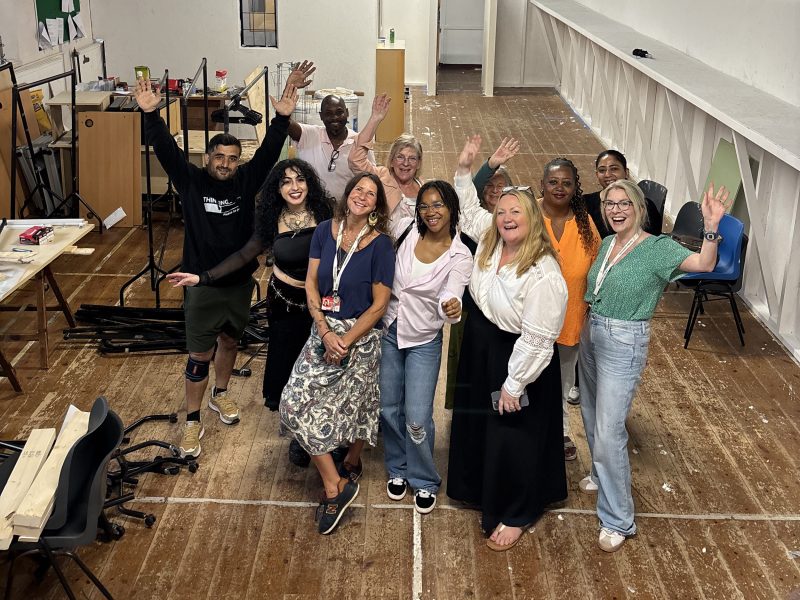
Being at the ten-year celebration of Aid Box Community – Hope and Help to Refugees (ABC) yesterday, in its luminous new home at St Bart’s Church on St Andrew’s Park, Bristol, was a rare replenishment. Inside that calm, reordered space – months of volunteer work folded into the wood and stone and sofas – Hope was resplendent, visible, huggable.
Not as an idea, but as a practice and a people.
We heard stories of lives rebuilt, safety nets woven by hand, open minds held steady against the cold winds of bureaucracy and indifference. You could feel Hope’s companions there too – Patience, Humility, Constancy, Dedication, and Love – in the walls, in the newly-made shelves, in the samosas, in the actual air.
And I couldn’t help thinking back to where this story began.
To the dystopian muddy football pitches outside Dunkirk in 2015, a temporary city of despair just beyond the manicured suburbs. To families running from wars waged in their name, wading through filth and rain, and the sound of Bristolian voices arriving with blankets, food, compassion.
Imogen Mcintosh Aid Box Convoy (as it was then) wasn’t born from policy or power. It was born from refusal – a refusal to look away and do nothing.
Because the image of Alan Kurdi, the little boy in the red T-shirt and denim shorts washed up on a Turkish beach, forced us to see what our politics had made invisible.
He wasn’t a symbol, he was just a tiny child.
His death exposed the absurd cruelty of borders, and for a moment the world’s heart cracked open.
It was also a moment Hope took root in the shape of ABC.
Today, however, this is under siege. While small charities like ABC are still doing the slow, sacred work of repair, the world around them is being scorched by the same forces that created the crisis in the first place.
According to Geneva Solutions, nearly one in five children on Earth now lives in a conflict zone. Forty-nine million have been forced to flee their homes. Over two million born in exile – babies whose first breath was taken in a state of displacement.
And increasingly, children are deliberate targets.
They are easy to reach, easy to terrify, easy to use as leverage in wars fought over power, resources, ideology, money.
So yes, Hope is tired. It’s been gaslit by governments, battered by algorithms, and drowned in the noise of a thousand competing outrages. Hatred, Fear, and Apathy have pitched their tents just outside our doors, selling us the illusion that safety is a zero-sum game. That someone else’s gain is our loss.
But that’s one of the oldest lies ever told. Because when we let those intruders in, when we build fences instead of tables, we don’t just lose our compassion, we lose our compass.
Places like ABC remind us that another story is possible.
A quieter one, written in the language of care and persistence. It says that none of us are perfect, but all of us are capable of grace. It say we share this sky, this patch of earth, this fragile human experiment.
Because Hope isn’t naïve or blind optimism. It’s hard-fought resistance.
It’s the stubborn belief that even now, especially now, connection matters more than convenience. That every act of empathy, every open hand, every welcome offered to a stranger, is a small but vital act of defiance.
Once you have Hope, hold it. Feed it and guard it like the treasure it is.
And if you need to find it again, you could do far worse than start at St Bart’s, where Aid Box Community keeps its light shining.
HUGE LOVE to everyone involved over this decade. An incredible movement of love – please make sure it remains.